
The Committee to Save the Cemetery in Opatów
The cemetery of Apta
An ancient beis hachaim where tzaddikim and rabbis were laid to rest for centuries. Today part of it is a town park and an amphitheater.
At a glance
- Before the war
- A large cemetery, centuries old, with thousands of graves
- Location
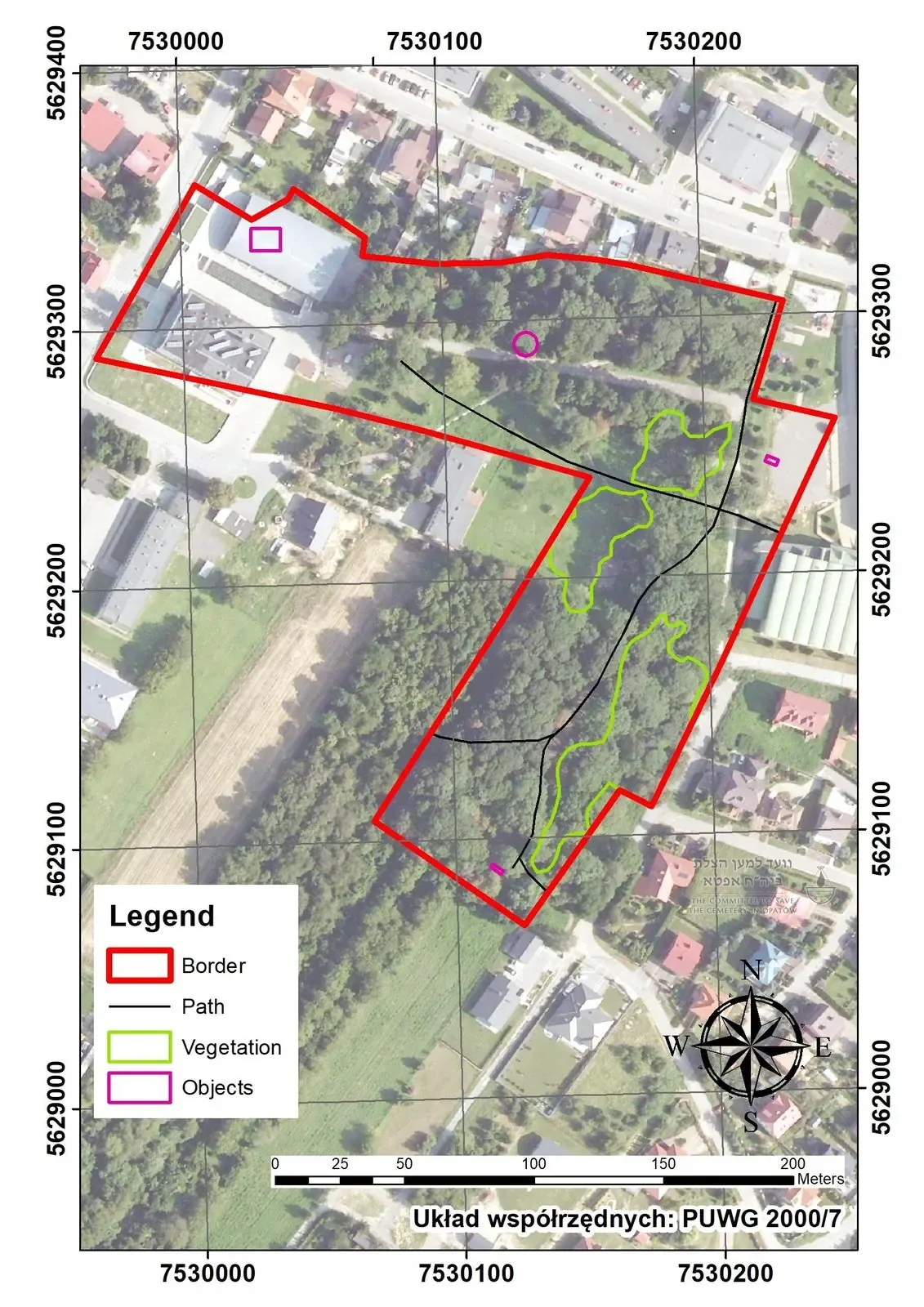
- Opatów (Apta), Świętokrzyskie province, Poland. The ground between ul. Kopernika and ul. Partyzantów
- Founded
- In the 1630s; first recorded in 1639
- Area
- More than three hectares
- What remains
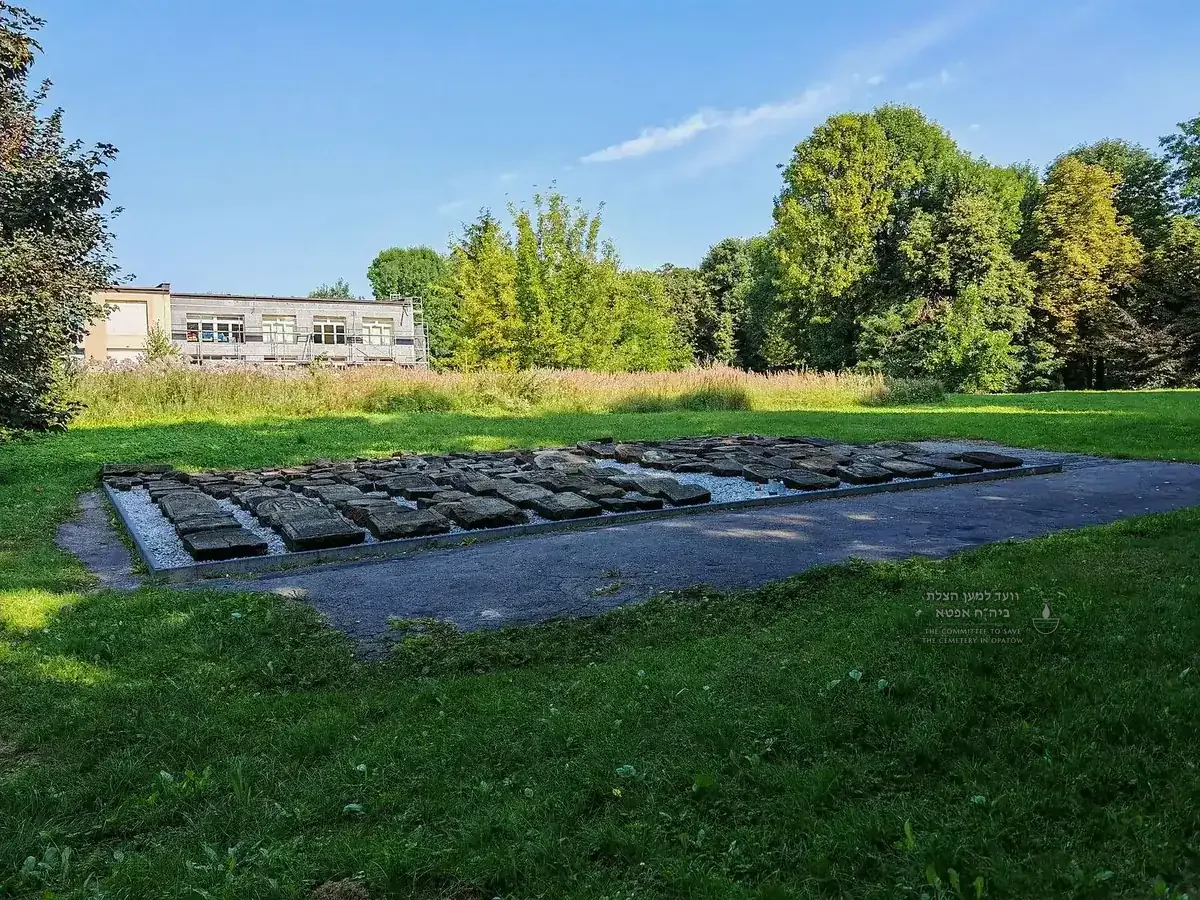
- A lapidarium holding about 30 matzevos and fragments, a registered monument (A.532, 1991); a symbolic gate with information plaques on ul. Kopernika (2012)
- The 2011 settlement
- Under a settlement recorded at the court in Kielce, the park part is kept as a "memorial park" of the cemetery, and the town undertook to preserve its character
- Today
- The ohel of the Ohr LaShamayim lies beneath the amphitheater seating, Row 5, Seat 6. A culture house, a kindergarten and the amphitheater were built on part of the ground. Concerts and public events are still held right on top of his grave. For the Jewish people this is deeply painful. It is a disgrace that no faith would accept at a resting place of the dead.
The site today
Tap a point on the map
The tziyun — the amphitheater
The amphitheater of the town culture centre on ul. Partyzantów. The Ohr LaShamayim's ohel rests beneath its seating.
The Google Maps listing used to point at the memorial. After the 2022 research, the committee moved the pin to the exact place of the Ohr LaShamayim's tziyun and added the Hebrew name.
Photos of the site
Tap a photo to enlarge it.
The site on the day of the hilula


Who rests here
The first ohel, right of the gate
The holy Ohr LaShamayim; at his right his son R' Pinchas, at his left R' Yaakov Biderman, grandson of R' Dovid of Lelov
The second ohel, attached
R' Shmuel of Apta, the Maggid, author of Toras Shmuel
The third ohel
R' Avraham Shlomo Epstein, the Ożarów Rebbe, who passed away in Apta in 1917
Near the ohel
A plain matzeva marked only "R' Shabsai Korech": R' Shabsai, father of the Maggid of Kozhnitz
The 2022 research
In summer and autumn 2022, archival research was carried out alongside a ground-penetrating-radar survey of the culture-centre grounds. The 1947 survey map, 1944 aerial photographs, the memories and paintings of a man born in the town, and the survey all point to the same spot: beneath the amphitheater seating.
The survey report describes findings under the seating that may come from the historical structures being sought, and recommends a targeted check to confirm them.
History of the cemetery
- 1639
First documentary mention of the cemetery
- 1827
The Ohr LaShamayim is buried in an ohel in the cemetery
- 1942
The Germans turn the cemetery into an execution site; about 300 Jews are murdered and buried there
- 1942–1945
During the German occupation the matzevos were torn out and used as building material
- 1956
Official decision to "close" the cemetery
- 1962
Approval to turn the cemetery into a park; the last matzevos are dragged away
- After 1962
A culture house, a kindergarten and an amphitheater are built on part of the ground
- 1989
A lapidarium of matzeva fragments is set up
- 1991
The lapidarium is entered in the monuments register (A.532)
- 2011
A court-recorded settlement in Kielce: the town undertakes to care for the park plots as a "memorial park" and to put up a gate and plaque
- 2012
A symbolic gate and information plaques on ul. Kopernika
- 2022
Archival research and a radar survey point to the place of the Ohr LaShamayim's ohel