Jewish Apta
Jewish Apta through history
A large and important Polish kehilla: a member of the Council of Four Lands, a town of great Chassidic leaders, until its destruction in the Holocaust.
The destruction of the Apta community
20 October 1942
On this day the ghetto was surrounded and the Jews of Apta were deported to Treblinka.
Timeline
- 1538Community
Four Jewish families live in Apta
- 1545Community
First privilege for the town's Jews, from Hetman Jan Tarnowski, owner of the town
- 16th c.Community
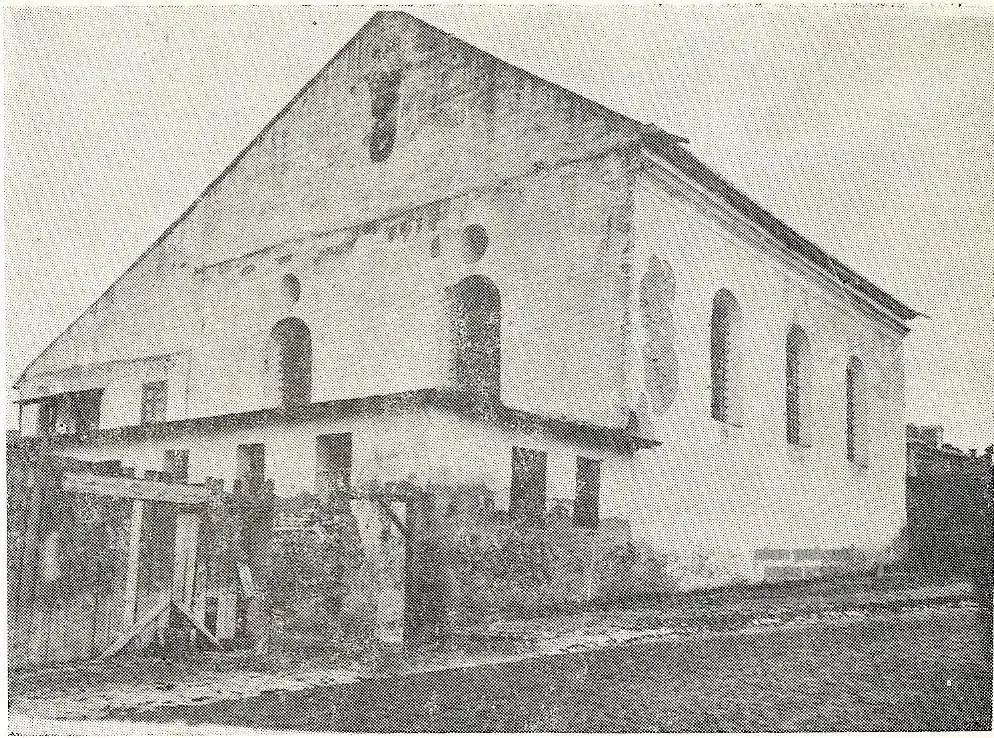
The first synagogue is built and land is set aside for a cemetery
- 1639Community
First documentary mention of the cemetery
- 16th–17th c.Community
Apta is a member community of the Council of Four Lands, and its delegates attend its sessions
- 1666Community
The community pinkas is begun; it survived into the 20th century and was lost in the Holocaust
- 1707–1738Rabbis & Chassidus
R' Yehuda Landau, father of the Noda BiYehuda, serves as parnas for the Council of Four Lands
- 1765Community
About 2,000 Jews live in Apta, an unusually large community for its time
- c. 1790–1795Rabbis & Chassidus
R' Moshe Leib of Sassov and R' Yaakov Yitzchak of Peshischa settle in Apta
- 1800Rabbis & Chassidus
The Ohev Yisroel serves as rav of Apta
- 1827Rabbis & Chassidus
The Ohr LaShamayim, rav of Apta, passes away on 25 Tammuz 5587 and is buried in an ohel in the cemetery
- TraditionRabbis & Chassidus
In a time of plague the rav of the town wrote his name on an iron staff and had it placed in the attic of the shul, and the plague stopped
Some say it was the Ohr LaShamayim, others the Ohev Yisroel. The staff lay there until the war years.
- 1931Rabbis & Chassidus
R' Shalom Rokeach Hy"d, son of the Maharid of Belz, becomes rav of the town; his brother R' Aharon of Belz comes to Apta for his installation
- 1941–1942Holocaust
The Germans set up a ghetto in Apta
Organisation began in 1940; the ghetto was closed off by an order of 13 May 1942
- 1942Holocaust
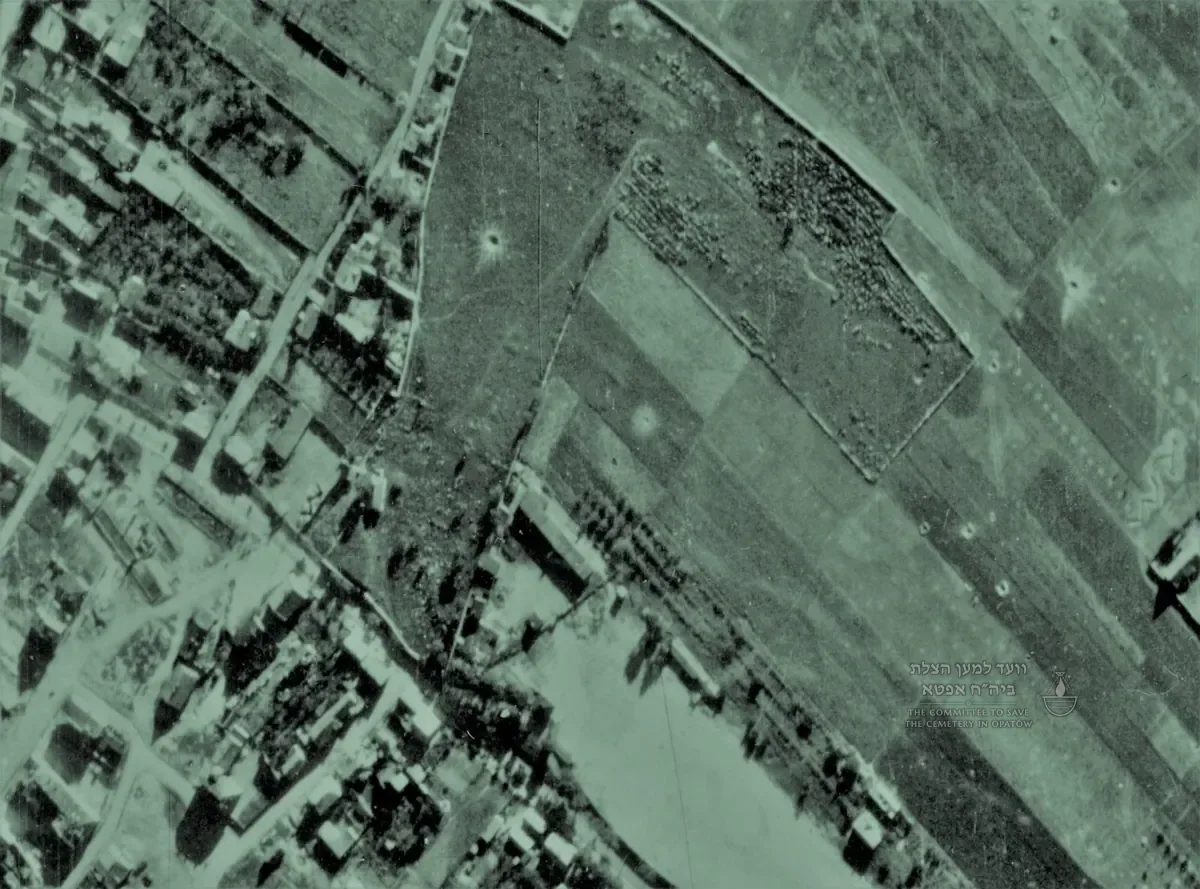
The cemetery becomes an execution site; about 300 Jews are murdered and buried there
- Oct 1942Holocaust
The ghetto is liquidated: about 6,500 Jews are marched to the Jasice railway station and sent to Treblinka
20 October 1942
- 1942–1945Holocaust
During the German occupation the matzevos were torn out and used as building material; the rest were removed in October 1962.
- 1962After the war
The authorities approve turning the cemetery into a park; a culture house, a kindergarten and an amphitheater are later built on part of it
- 1989–1991After the war
A lapidarium of matzeva fragments is set up and registered as a protected monument
- 2012After the war
A symbolic gate and information plaques on ul. Kopernika
- 2022
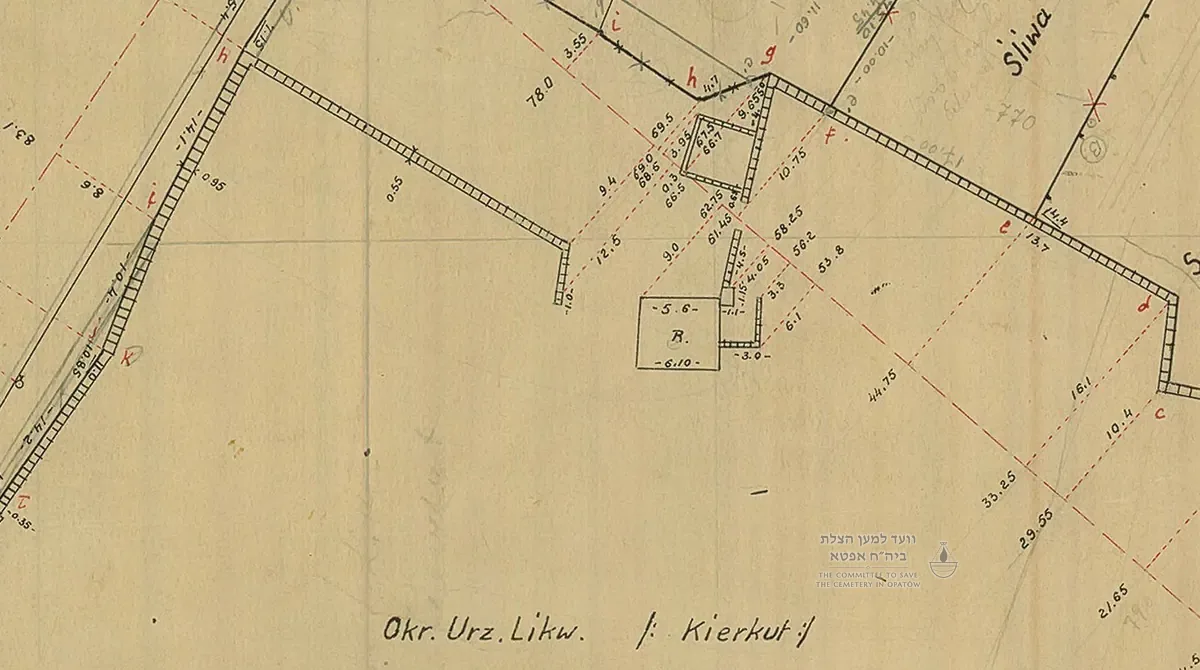
Archival research and a radar survey point to the place of the Ohr LaShamayim's ohel, beneath the amphitheater seating
From the archive